















MN Lyme is a non-profit organization that seeks to to provide a supportive environment for people affected by Lyme and other tick-borne diseases and to educate the public and health professionals in the prevention, diagnosis, and effective treatment of these diseases.
Any person affected by Lyme or tick-borne disease can lead a healthy and vibrant life
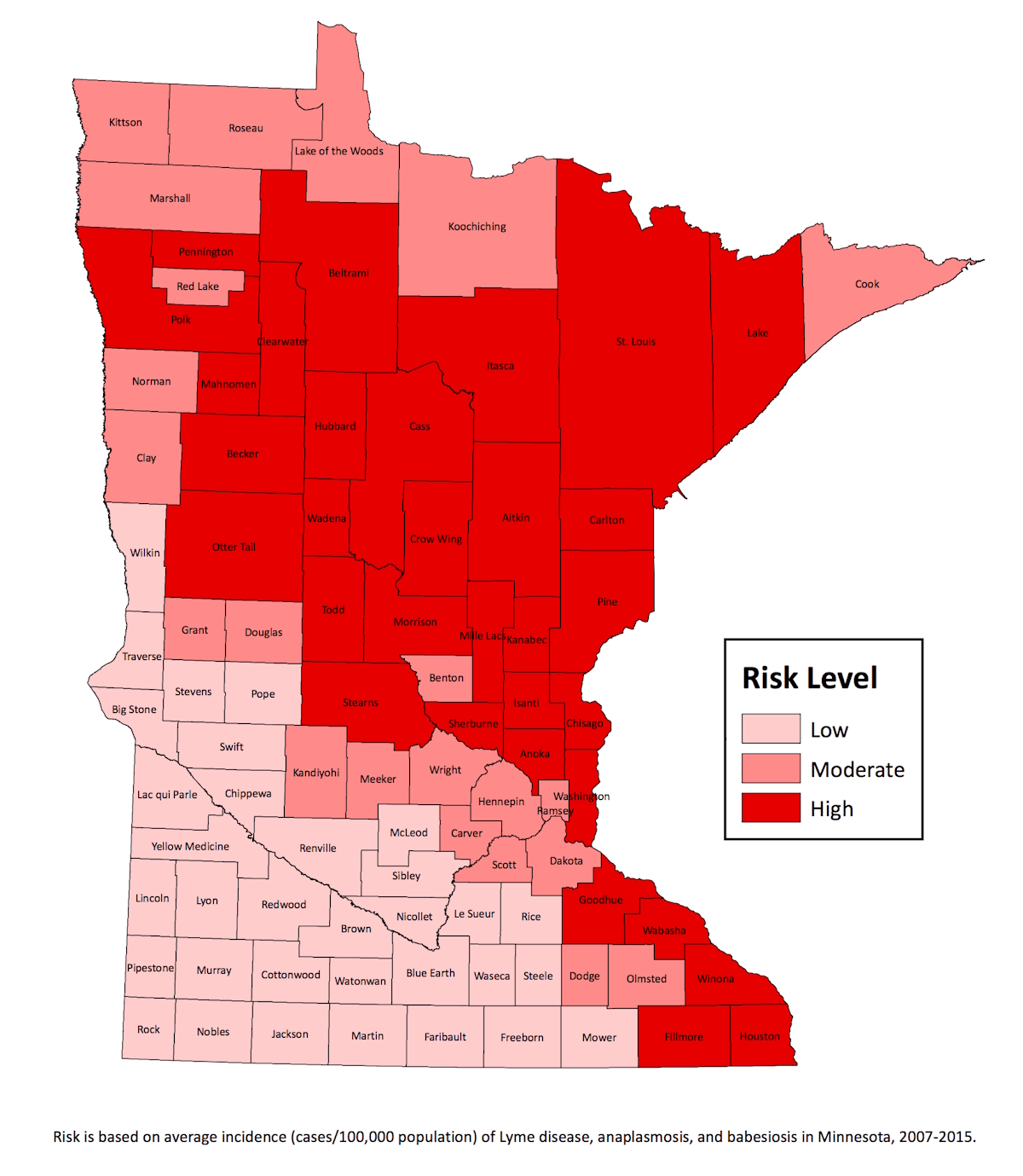
Minnesotans across the state are at risk for acquiring tick-borne diseases. The highest risk is in the southeast, east central and north central areas of the state. Grassy fields, brush-filled wooded landscapes and places where residential neighborhoods meet the forest edge are prime tick habitat. Our brochure contains information to help you mitigate your risk for Lyme and other tick-borne diseases.
The surest way to prevent Lyme or other tick-borne diseases is to avoid being bitten by ticks. In Minnesota, the areas with the highest risk are the southeast, east central and north central regions of the state. It is important to note that ticks are found across the state, in grassy fields, brush-filled wooded landscapes and places where residential neighborhoods meet the forest edge. If you work or recreate in these environments, take special precautions to protect yourself and your loved ones.
Almost all cases of Lyme disease start from the bite of an infected deer tick. Not all ticks are infected; infection rates vary from one locality to another. Ticks have 4 life stages, egg, larva, nymph and adult and each tick feeds 3 times during their life. Nymphal deer ticks, which cause most of the cases of Lyme disease, are tiny, about the size of a poppy seed. Adult deer ticks can also cause infection. Because their bite is painless, you may not notice that you have been bitten. The longer ticks are attached, the greater the risk for developing Lyme or other tick-transmitted diseases. Bites lasting less than 24 hours rarely result in Lyme disease but when an infected tick remains attached for the entire 3-4 day feeding period, the risk of infection becomes greater than 90%. Take these steps to reduce the risk of a bite or tick attachment lasting more than 24 hours.